Lifeform databank
Browse creatures, scan text, behavior notes, and known map locations.
Available lookup records

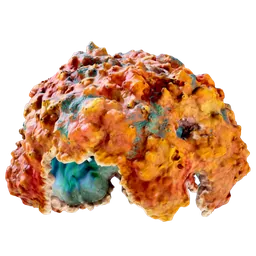
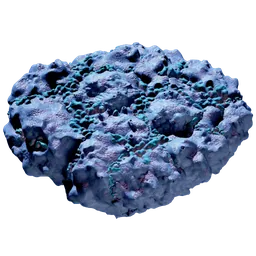
*Raion carbonica*. A colony of worms living inside a shared membrane, probably a sponge. Uses weak acid to digest prey. 1. Raion An organism defined as a sponge occupied by a colony of cloned predatory worms. This sponge is chambered, akin to Earth's extinct...
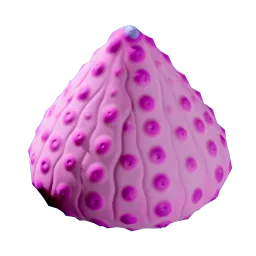
A glowing sponge (tentatively *Symphon aeroshell*) that resembles the cone of a heat shield on atmospheric entry. 1. Predation strategy The aeroshell feeds on microorganisms attracted to light, especially in dark caves where it can be mistaken for the sun. 2....
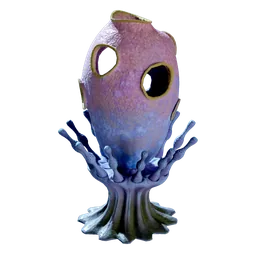
*Symphon amphora*. A sponge adapted to colonize — and create — air pockets. 1. Amphora-shaped structure Like all sponges, the amphora requires constant flow through its pores to survive, but it pumps air rather than water. Contraction and expansion forces moi...
*Symphon apokalupsis*. An unassuming button-shaped sponge that may be an omen of mass extinction. 1. Simplicity Among the earliest animal forms on Earth, sponges are a group of cells that live between two membranes and work together to pump water. Sponges on...
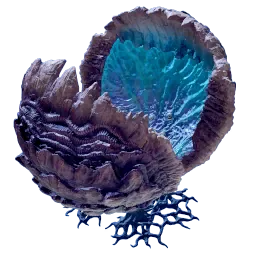
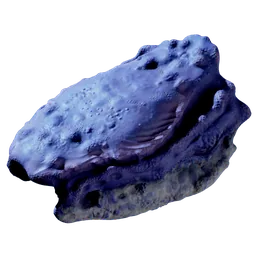
*Megahecaspid aster*. A colony of shell-forming, algae-like organisms analogous to Earth's haptophytes or coralline algae. 1. Megahecaspid A colony of hecaspids — organisms with fatty or starchy interiors surrounded by many shields of calcium carbonate. 2. Ba...
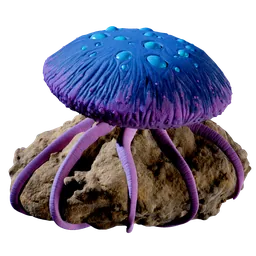
*Dactylbrachia gigas*, the behemoth finger-legged jelly. A massive specimen with no Earthly analog. 1. Jellylike body plan Even the largest terrestrial jellies are anatomically simple, with a gelatinous bell, a central stomach, and tentacles. By contrast, the...
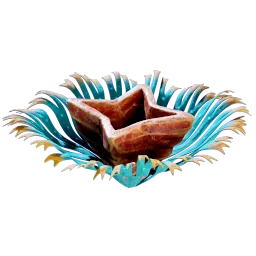
*Shootroot cabbage*. A robust bottom-dwelling organism anatomically similar to a plastic starfish, or to an opened variety of Earth's extinct blastoids. 1. Animal anatomy The cabbage shootroot's upwards-facing mouth is surrounded by outstretched arms. These a...
*Gorgon thalamiskos*. A predatory soft coral named for its resemblance to Earth's gorgonians. 1. Sponge-coral moiety Like hard corals on this world, gorgons are sponges inhabited by cnidarian polyps — tiny jellyfish like organisms which live within the sponge...
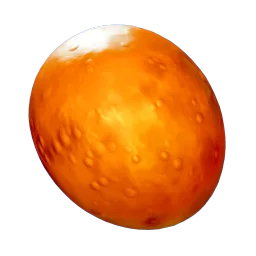
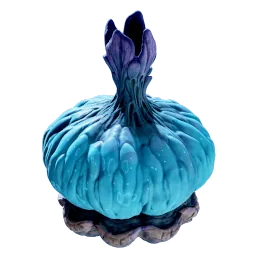
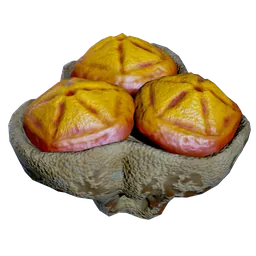
*Rotsac cherimoya*. A tunicate-like animal which collects alcohol from decaying matter to produce a creamy, flavorful mucus. 1. Cherimoya Named for its resemblance to the terrestrial cherimoya fruit (or custard apple). It can be eaten whole or sucked on throu...
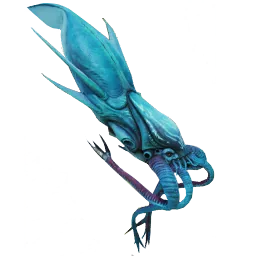
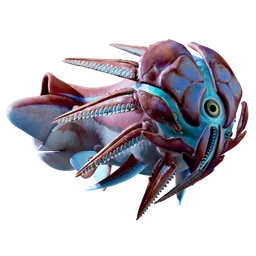
Enormous cephalopod predator (tentatively *Tyrannoteuthis phobocoeus*, tyrant squid of fearful curiosity). Feeds on hard-shelled, heavily defended prey. Solitary but highly intelligent. Likely a deep-sea creature. 1. Squidlike body plan The collector's body c...
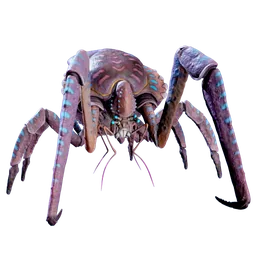
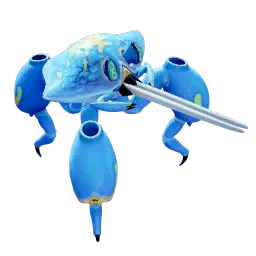
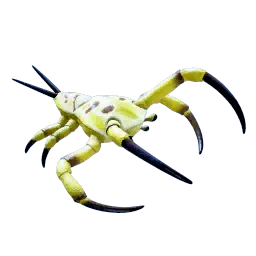
An enormous crab (tentatively *Ostrakonskelos anaktoraphore*, hard-legged palace-bearer) that hides among coral domes. 1. Crablike body plan Forelimbs rake and dig for food which is collected by long soft maxillipeds (food handling limbs) around the mouth. Th...
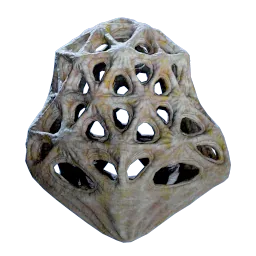
*Coral geodesica*. The defining feature of its shallow biome. 1. Coral analog Like Earthly coral, the dome is a colony of polyps, small jellyfish-like animals that secrete a limestone skeleton. This process uses dissolved carbon dioxide from the seawater: cor...
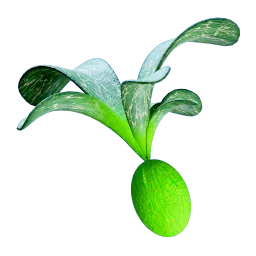
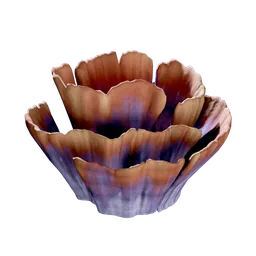
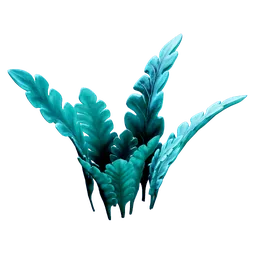
A basket-shaped organism (tentatively *shootroot cunabulum*) with no clear Earthly analog. Anatomically similar to a plastic starfish, or to an opened variety of Earth's extinct blastoids. 1. Animal anatomy The flattened, fibrous 'leaves' are the arms of an a...
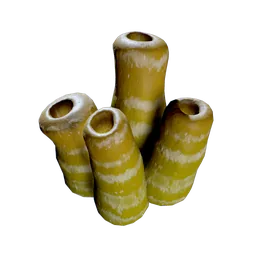
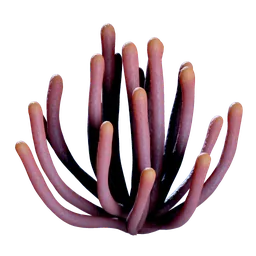
*Gorgon aulaia*. A soft, predatory coral akin to Earth's gorgonians, especially the Venus fan. 1. Sponge-coral moiety Like Earth's brown tube sponges (*Agelas schmidti*), soft corals on this world are a colony of coral polyps growing within a matrix of sponge...
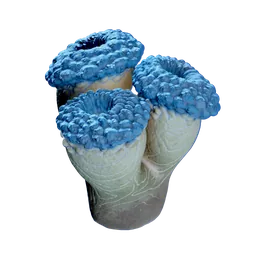
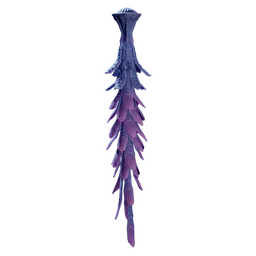
*Salp pendulous*. A sticky, suspension-feeding predator that captures organisms from the current. 1. Salp-like biology Like Earth's salps, this is a colony of zooids — tiny, cloned animals (in this case tunicates) — that form a long, tube-like pump. The salp...
*Titanotagmatapterya amalthea*, the titanic wing-segmented cup of plenty. An enormous arthropod leviathan with a huge tearing beak and a payload of fatty deposits, which it uses to both feed and protect its eggs. 1. Ancient origins The brooder's ancestors, th...
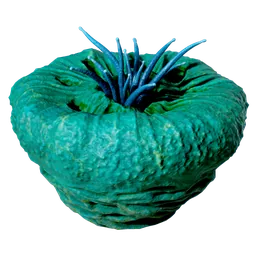
An organism (tentatively *Raion donut*) that resembles an Earthly anemone or ceriantherian, but is actually a sponge occupied by a colony of predatory worms. 1. Raion An organism defined as a sponge occupied by a colony of cloned predatory worms. 2. Hunting s...
Donut of worms (tentatively *Raion donut*) without visible worms. 1. Normal state Just as terrestrial corals contain photosynthetic partners called zooxanthella, the donut contains a population of predatory worms. 2. Disturbed state Just as terrestrial corals...
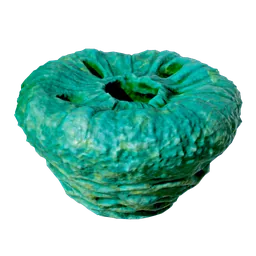
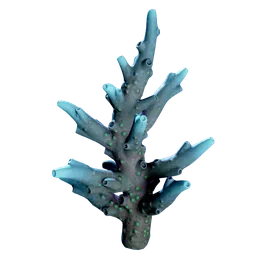
*Coral dragonscale*. A hard coral that grows on hydrothermal vents, using the temperature gradient between its hot base and its cold-water lip to drive metabolic reactions. 1. Hard coral Dragon's scale polyps must grow their hard coral shells in water rich wi...
Electric geordie (tentatively *Salpapod geordiwangi*). A relative or morph of the common geordie. Attracted to electrical current. 1. Electrotropism Electric geordies seek out live current. They can tolerate surprising amperages, making them dangerous to remo...
*Postpanoplia epicurean*, the voracious unarmored armored fish. Unpredictable and hungry, especially when under the influence of a parasite. 1. Sea hippo The epicurean is a true omnivore, consuming dozens of kilograms of animals, microorganisms, minerals and...
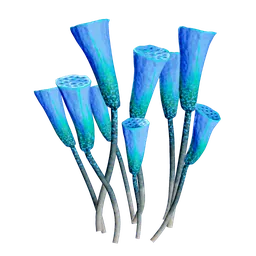
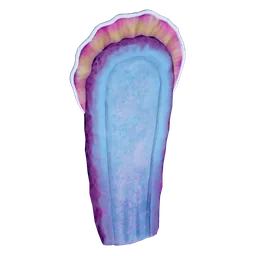
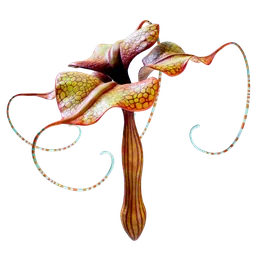
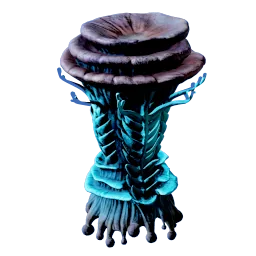
Tentatively *Polymephycite tympanum*. Not animal, plant, or fungus, but a fourth category of complex life analogous to Earth protists. 1. Central structure The central stipe is a biopolymer akin to chitin or keratin held upright by a beard of air-filled sacs...
*Spraion flagon*. Databank generation alert: known scientific theory inadequate to explain specimen. Interpretation and improvisation may lead to error. 1. Sponge-worm hybrid Like the raions, this is a sponge occupied by worms. The sponge pumps seawater, whil...
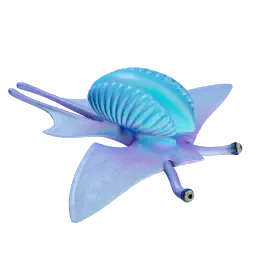
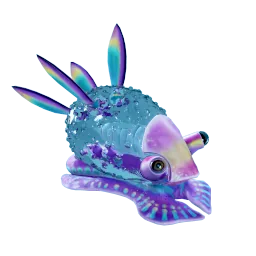
*Seaslug kleptopharos*, the stolen beacon slug. A free-swimming, luminescent relative of the waterslug with chimeric traits from another species entirely. 1. Microbial photocell The flash slug is powered by the same type of microbial fuel cell present in the...
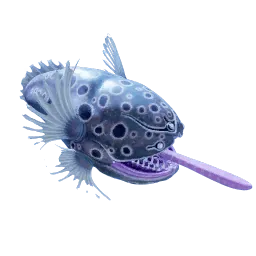
Foureye (*Morokotoform duplex*). A predatory fish always born in pairs of identical twins. The twins pair belly-to-belly, joining their digestive and nervous systems to behave as a single organism. 1. Predatory individual The individual "two-eye" is convergen...
*Ventworm cryocthonian*, the vent worm that brings cold from below. 1. Vent worm The fridge worm's body plan is familiar from terrestrial analogs — a tubular body with a protruding gill. The body hosts a colony of symbiotic bacteria in a chamber called the tr...
Although technically alive, gateway spires are constructs more akin to termite mounds. 1. Impeller ring The oldest part of each gateway spire is the impeller ring. This ring contains a loop of conductive, metallic bacterial fibers surrounded by layers of poly...
Geordie (tentatively *Salpapod geordie*). A jet-propelled omnivore evolved from an organism resembling a bony octopus. 1. Rasping jaw The geordie's hard mouthparts can brush algae off rocks, crush small crustaceans, pull plugs out of coral and cut wads of kel...
Great jaw (tentatively *Megamya sudacna*, great clam that bites you). An enormous omnivorous clam with a a dangerous defensive/feeding strategy. 1. Clam Like Earthly bivalves, the great jaw's body consists of two minerals shells connected by powerful adductor...
Halfmoon (tentatively *Moliform luna*). Large forage fish which strains plankton from seawater and nibbles at small growth. 1. Prey fish Staple foodstuff for predators—has evolved several flee-and-hide behaviors. Edible, but a fabricator cook is recommended....
Hammerhead (tentatively *Panoplia hammerhead*). An armored, herd-dwelling, territorial herbivore with a powerful ram. 1. Hammer head Challenges intruders on its territory, especially other hammerheads. Displays its pectoral fins and closes its enamel head shi...
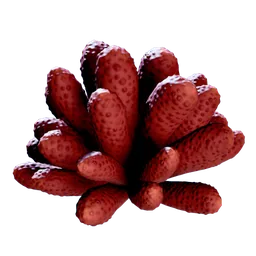
*Hecaton tunic*. Named for the hundred-handed hecatoncheires of Greek myth. A complex of animals undergoing competitive sex differentiation. 1. Anatomy Each pore on the surface of the hecaton is the mouth of a tunic, a complex filter-feeding animal. The colon...
Houndgar (tentatively *Teuthis courser*). A squid that dazzles prey for marrowbreach ambush. 1. Squidlike body plan Shares a basic bauplan (body plan) with terrestrial squid — a beaked head, eight arms, a long soft body, a pair of fins. Developed fin structur...
*Monopter astrapakantha*, the one-finned lightning thorn. A small fish that has discarded fins in favor of a living magnetohydrodynamic thruster. 1. Monopter Fish are a common body plan across alien worlds, but they usually evolve fins or wings for propulsion...
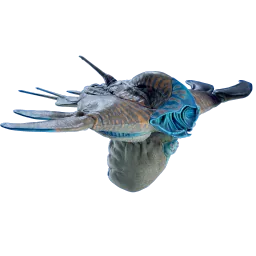
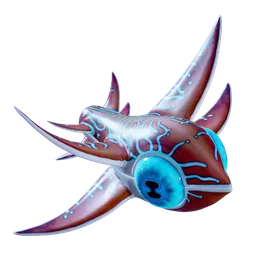
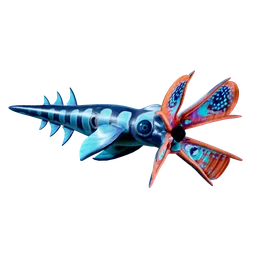
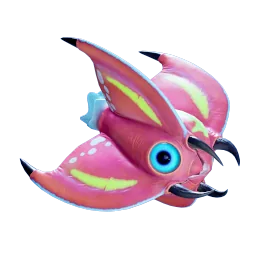
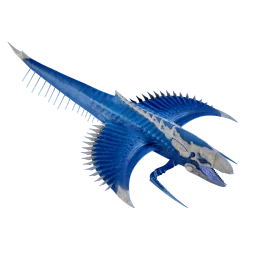
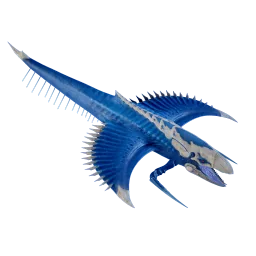
*Hycean hycean*, a remarkable flying predator named for planets that mix a hydrogen sky and a water ocean. 1. Gasbag flyer Though descended from the same squidlike ancestor as the houndgar and other Protean teuthis, the hycean's mantle is full of buoyant hydr...
*Anthobrachia hebesoros*, the young stack of flower arms. Reproductive stage of a flower-like jelly. 1. Polyp Despite its resemblance to a kelp, the jelly lei prefers to hang underneath surfaces—where it cannot photosynthesize. It is the rooted polyp phase of...
Jelly ring (tentatively *Thermodont sufganiyah*, heat eating jelly donut). Not a jelly, but full of jelly. Feeds on the heat and chemical flux of hydrothermal vents. 1. Pyrosome A colony of tiny clone animals called zooids. Unlike solitary tunicates (like the...
Jetocaris (tentatively *Tripod phrontiscaris*). A three-legged social crustacean that displays parenting behavior. 1. Tripod body plan Due to early evolution of bilateral symmetry, no three-legged organisms exist on Earth. The jetocaris’ legs may have formed...
*Gorgon Kryphakous* or Listening Gorgon. A soft coral with dull olive filaments. A predatory filter feeder that sways with the current like kelp. Not known to be hostile or harmful to humans, but remains under observation (see notes below). 1. Sound sensitive...
Tentatively *Rotsac lucifer*, the light-bringing rotsac. A tunicate-like animal which ferments decomposing biomatter inside its body. 1. Hidden body The rotsac's larval swimming body transforms into a spherical adult form. Because fermentation does not requir...
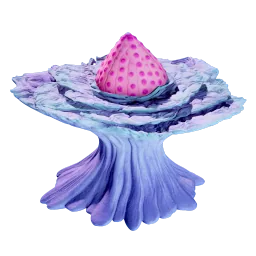
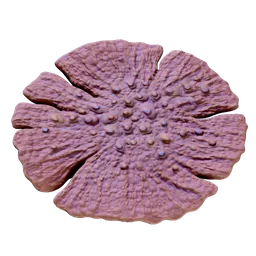
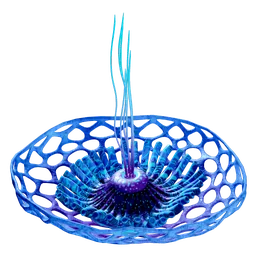
*Symphon macaron*. A sponge that has developed a disc of flagellated feeding cells. Named for the dessert sandwich cookie (not available in current fabricator settings). 1. Hardened plates Instead of a sponge's normal inner and outer layers, the macaron devel...
Marrowbreach (tentatively *Mango marrowbreach*). Dangerous selachian predator. (Selachian means sharklike.) 1. Bone-cutting jaws Adapted to shear through tough, plasticized flesh. Edged in iron and salt tesserae. Bites deliver thousands of newtons of force in...
Tentatively *Pyloraptor mimic*. A predatory animal disguised as a leafy kelp. Discharges electrical shock when disturbed. 1. Cephalopod-like body Resembles an octopus or squid planted mantle-down in the seabed, with its arms spread to mimic kelp. Pouches of s...
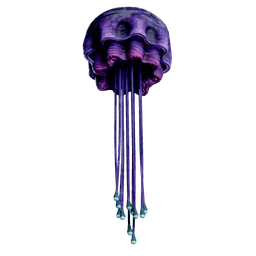
*Anthobrachia necrolei*. A clonal stalk of large jellies, similar to Earth's stauromedusae. Each jelly remains moored to the stalk, rather than maturing into a free-swimming medusa. 1. Enormous size and hunger Rather than feeding on prey, the necrolei gathers...
*Mango kestros*, the dart-throwing shark. Territorial predator capable of launching uranium-tipped tusks at up to twenty meters per second. 1. Erupted jaw Dominated by six upper jaw tusk sockets. The lower jaw has receded into the throat for rasping and crush...
Nibbler mango (tentatively *Mango tructa*). A pesky omnivore adapted to scrape-feed. It will happily snap at fish, sponges, kelps, and human limbs. 1. Tooth-rich jaws Enormous jaw crests (the upper rhinotheca and lower gnathoteca) crush rocks and dead coral b...
Noon gorgon (tentatively *Gorgonian meridiem).* A predatory soft coral that lures prey by mimicking the sun in the dark. The brightest noon gorgon in a cave will attract the majority of the prey, creating an arms race to be as bright as possible. Noon gorgons...
*Tunic aeolian*. A bizarre animal that splits seawater into hydrogen (on which it feeds) and oxygen (which it releases). 1. Tunic Like Earthly tunicates, this is a complex animal with a heart, nerve chord, and a flexible exterior shell (the tunic). 2. Radioly...
*Sporal psephos*. A moiety (two paired species) of a sponge and a coral. Possibly a single chimeric organism. 1. Reefbuilding Reefbuilding on this world seems to be carried out by a range of sponge-coral pairings. In hard corals, the sponge has lost its abili...
Databank generation HALT. User-facing error: The scanned entity ("pent") is not alive. It contains no cells, no genetic material, and no water chemistry. Resuming generation. 1. Gross traits The pent is a soft, waxy body that contains a bath of sulfuric acid....
Quadrate (tentatively Salpapod tetragnatha). A carnivorous relative or morph of the common geordie. 1. Geordie similarities Shares the geordie's body plan, but trades the geordie's rasping jaw for four piercing teeth. 2. Carnivorous diet The quadrate burrows...
A hard coral that frequently grows on hydrothermal vents. It uses the temperature gradient between its anchored base and its cold-water lip to drive metabolic reactions. Await further updates.
"Most of the biosphere is void. A wet desert five thousand meters deep. Life at the surface has its time in the sun and then it dies. The dead snow down to the bottom to feed strange life. "But in that void is also form. Empty space actual, soaring black and...
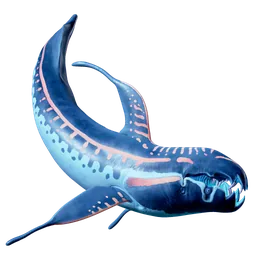
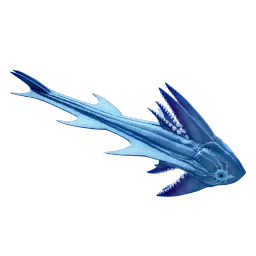
*Skythopterygion atropos*, the scythe-finned fate-ender. The male of a sexually dimorphic leviathan predator species which dwells in open water and attacks in packs (or shivers). 1. Death's head The ancestors of the shiver leviathan diverged from other Protea...
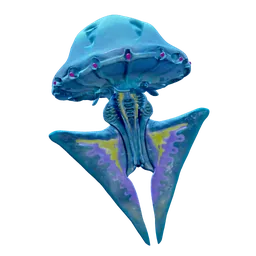
Surge jelly (tentatively Staurobrachia capacitor). Large, complex jelly that hunts with electric shocks. 1. Single animal Unlike colonial organisms such as the Portuguese man'o'war, the surge jelly is a single animal with specialized tissues—far *more* specia...
*Hyphen tallshroom*. A mysterious, chitinous life form with no clear terrestrial analog. 1. Hyphen Hyphens are colonies of hard-shelled hecaspids: shell-making algae. (Algae on this world descended from a star-like 'solarian' cell, while all animal life desce...
This enormous colony organism (Lithodont titanicae) resembles a spinal cord protected by a thick crablike shell. It extends beyond scanner range in both directions, growing through fractures in the seabed rock. 1. Hollow interior: The interior of the bore con...
*Ostrakonskelos glossaklept*, the hard-legged tongue thief. A parasitic crab or louse that dwells in the mouth, causing intense and unremitting hunger. 1. Crablike body plan A close relative of other Protean crabs, belonging to the infraorder Adulati. The seg...
*Raion calix*. A puzzling combination of worm colony (the raion) and slime mold. 1. Feeding strategy Feeds on drifting matter, though the worms also sting and kill meiofauna (small sea life between 45 nm and 1 mm in size). 2. Glassy central structure The cent...
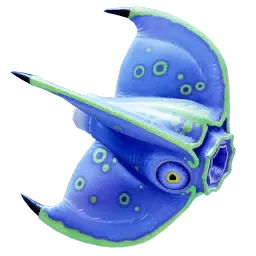
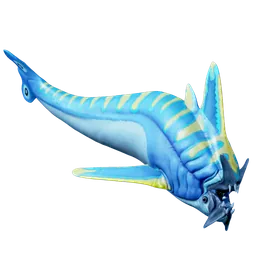
*Sitaroid gemini*, the twin ray that resembles a sitar. A dark-sea electropredator driven towards the surface by ecological disruption. 1. Sitar ray Sitar rays, named for their resemblance to Earth's guitarfish, probably diverged from mangos less than 25 mill...
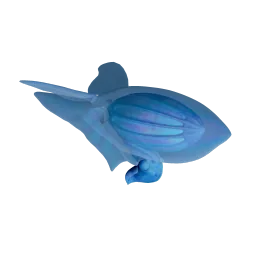
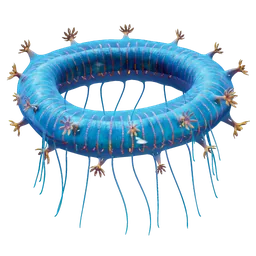
Water slug (tentatively *Seaslug hydroclast*). A biological enigma that converts seawater into drinkable fresh water. 1. Microbial fuel cell Removing salt from seawater is energy-intensive. Nonetheless, the water slug does it, perhaps as a byproduct of an int...
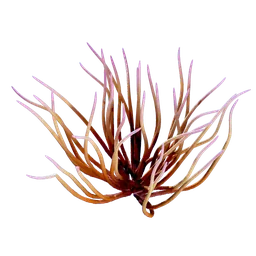
*Gorgon mastix*, the whip gorgon. A soft coral similar to the earthly gorgonians — it lacks the hard limestone shell of a true reefbuilding coral. 1. Earthly namesake Named for the extinct *Leptogorgia virulata*, Earth's sea whip. Like the sea whip it is a pr...
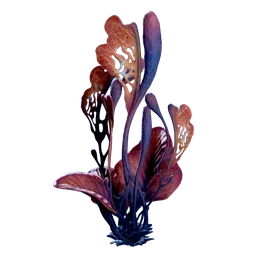
*Wort wort*. One of the first kelplike organisms encountered on this world (provisional designation: *kaulos*). Like kelps, it is a large algae, not a plant. Rather than photosynthesis. the wort wort generates energy through fermentation. 1. Living fermenter...